
Type "paintings for sale" or "oil paintings for sale" into a search engine and you will get millions of results in under a second — auction houses, big-box decor sites, online print marketplaces, independent artists, and traditional galleries, all competing for your attention. If you have ever felt overwhelmed trying to figure out where to even begin, you are not alone. Buying art is one of the few purchases most people make only a handful of times in their life, and there is no consumer’s manual that comes with it.
This guide is that manual. We wrote it from the perspective of gallery owners who have spent over three decades collecting fine art and more than a decade helping collectors — first-time buyers and seasoned ones alike — find paintings they will love for a lifetime. We will walk you through every step of the process: figuring out what style genuinely speaks to you, telling an original painting from a print, evaluating the quality and condition of a piece, understanding what actually drives a painting’s price, buying with confidence whether you are standing in a gallery or shopping from your couch, sizing and hanging a piece correctly, and caring for it once it is on your wall.
One thing you will not find in this guide is a pitch about art as a financial investment. We simply do not believe that is the right lens for most people buying a painting for their home, and we will explain why in the next section. What you will find is practical, honest, how-to advice you can use no matter where you ultimately decide to buy.
Why Buy an Original Painting in the First Place?
A mass-produced print, a piece of hotel-lobby decor, or a poster from a big-box store can certainly fill a blank wall. But an original painting does something different: it brings a one-of-a-kind object into your home that was created by a specific person’s hand, at a specific moment, and that will never exist in exactly that form again. Run your eyes across the surface of an original oil painting in good natural light and you will see texture — ridges of paint, the direction of a brushstroke, places where the artist built up layers or scraped them back down. None of that exists in a print, no matter how good the printer.
There is also a story behind every original painting: who painted it, when, where, and why. Collectors often find that the painting they end up loving most is the one whose story they can tell their guests — the artist who painted alongside a particular river, the genre scene that captures a slice of everyday 19th-century life, the sporting picture that reminds you of your own family’s traditions. That connection between the eye, the object, and the story is really what buying original art is about. Choose the piece that stops you in your tracks and makes your home feel more like your home. That is a good enough reason on its own.
Step 1: Figure Out What You Actually Love
Before you can shop intelligently, it helps to know the vocabulary collectors and dealers use to describe subject matter. Most representational paintings fall into a handful of broad genres, and most people naturally gravitate toward one or two of them without realizing it. Here is a quick primer, along with what to look for in each.
Landscape
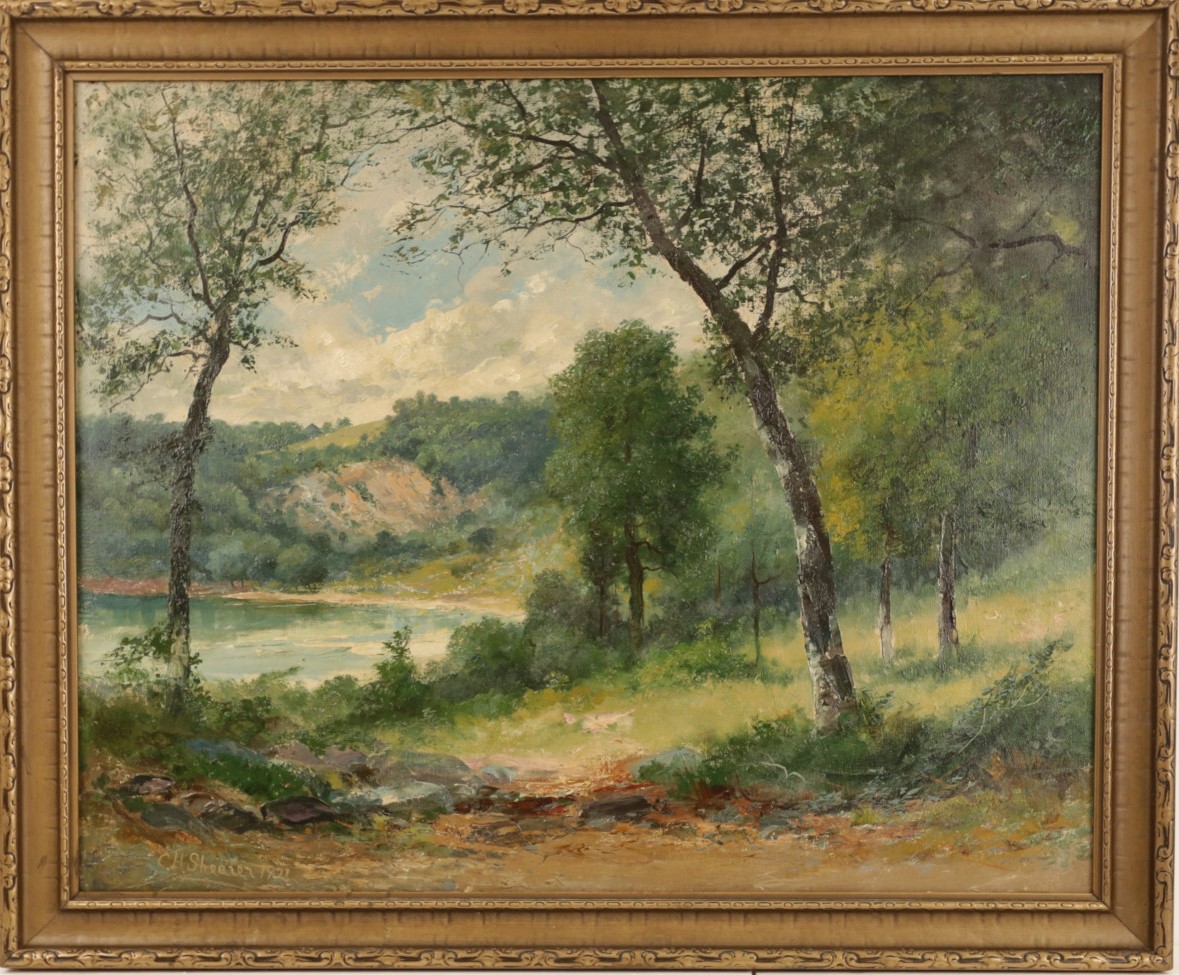
Landscape paintings depict the natural world — mountains, rivers, fields, forests, and skies — and they are consistently among the most popular genres for a reason: they bring a sense of calm and open space into a room. When evaluating a landscape, look at how the artist handled light and atmosphere. Does the sky feel like it is actually glowing, or does it look flat? Is there a clear sense of depth, with the foreground, middle ground, and background receding convincingly into the distance? Some of the finest 19th-century American landscapes came out of specific art colonies — for example, a group of Pittsburgh-area painters known as the Scalp Level School gathered along Paint Creek and Shade Creek in western Pennsylvania to paint en plein air (outdoors, directly from nature). Knowing a bit about these regional colonies can help you appreciate why a particular landscape looks the way it does.
Marine
Marine paintings focus on the sea — ships, harbors, coastlines, and dramatic wave action. A strong marine painting captures the specific character of water and weather: the translucency of a breaking wave, the way sails catch wind, or the eerie stillness of a becalmed harbor at dusk. If you love the water or have a coastal or lake home, this genre can anchor a whole room.

Still Life
Still life paintings arrange inanimate objects — fruit, flowers, game, tableware — into a composed scene. They reward close looking: the way light falls across a piece of glass or metal, the subtle color harmonies between a bowl of fruit and the cloth beneath it, the sheer technical control it takes to make a two-dimensional canvas convince you that you are looking at something you could reach out and touch. Still lifes tend to work beautifully in dining rooms, kitchens, and smaller, more intimate spaces.

Genre Painting
In art terminology, "genre painting" does not mean "category" — it specifically refers to scenes of everyday life: a family at the dinner table, children at play, workers in a field, a quiet domestic interior. These paintings offer a window into how people actually lived, and the best examples convey real narrative and emotion in a single frozen moment. If you are drawn to paintings that tell a story about people rather than places or objects, this is likely your genre.
American Historical and Political Art
This category depicts specific historical events, figures, or moments in American history — Civil War scenes, frontier and westward-expansion imagery, portraits of notable figures, and depictions of important surveys and expeditions. Beyond their visual appeal, these paintings carry documentary and educational value; many were painted by artists who traveled with government or railroad survey expeditions, or who lived through and depicted the events themselves. If you appreciate American history, this genre lets you hang a piece of it on your wall.

Sporting Art
Sporting art captures hunting, fishing, and other outdoor sporting pursuits, along with the dogs, horses, and wildlife associated with them. This genre has a long, respected tradition in both British and American painting and tends to suit dens, offices, lodges, and any space with a traditional or masculine design sensibility — though sporting art collectors come from every walk of life.
Animal Art
Animal paintings feature wildlife or domestic animals as the primary subject, whether a formal portrait of a beloved dog breed, a study of cattle in a pasture, or wildlife in its natural habitat. A well-painted animal picture captures not just anatomy but personality and movement — the alertness in a dog’s eyes or the tension in a horse’s stance.

Contemporary Realism
Alongside historical works, many collectors round out a collection with contemporary realist paintings — and occasionally sculpture — by living artists working in traditional, representational styles. A well-chosen contemporary piece from a regional or local artist can sit comfortably next to a 19th-century painting; both share a commitment to craftsmanship and beauty, just separated by a century or more. It is also worth pointing out that quality is not a function of age: a wonderful painting is a wonderful painting whether it was completed in 1875 or last year.

A tip from the gallery floor: if you are not sure what you love yet, that is completely normal — and it is not something you need to figure out alone. Most people intuitively know what they like when they see it, even if they cannot name the genre. A good dealer will ask questions about your space, your existing decor, and the paintings that have caught your eye in the past, and use your answers to point you toward pieces you might not have found on your own.
Step 2: Know the Difference Between an Original, a Print, and a Reproduction
This is one of the most important — and most commonly misunderstood — concepts in art buying. An original painting is a unique, one-of-a-kind object physically created by the artist’s hand. A print (sometimes called a giclee, a reproduction, or a limited-edition print) is a mechanically or digitally reproduced copy of an original image, often produced in an edition of dozens, hundreds, or even thousands of identical (or nearly identical) copies. Some prints are "hand-embellished," meaning an artist or studio adds a few dabs of paint on top of the printed image to simulate texture — this is still fundamentally a print, not an original.
Here is how to tell the difference when you are shopping, especially online:
-
Ask directly what the medium is. A listing should specify "oil on canvas," "watercolor on paper," "pastel on board," and so on — not just "art" or "wall décor."
-
Ask for a raking-light photo. A photo taken with light coming across the surface at an angle will reveal genuine brush texture on an original; a print will look perfectly flat no matter the angle.
-
Ask for a photo of the back of the canvas or panel. An original will show the actual weave of raw canvas, wooden stretcher bars, and often age-related characteristics on the reverse; a print reproduction typically will not.
-
Check for edition numbers. If you see a fraction like "24/250" written in pencil near the image, you are looking at a print from a limited edition, not an original.
-
When in doubt, ask the seller in writing to confirm, in plain language, whether the piece is an original, one-of-a-kind work or a printed reproduction, and get that answer before you buy.
None of this is to say that prints are bad — they simply serve a different purpose (accessible price points, decor flexibility) than an original painting does. The key is knowing exactly what you are buying so there is no confusion later.
Step 3: Learn to Evaluate the Quality of a Painting
You do not need an art history degree to develop a good eye — you just need to know what to look for. Here is a practical checklist to run through with any painting you are seriously considering.
Composition and Balance
Does your eye move naturally through the painting, or does something feel awkward or off-balance? Strong compositions guide the viewer’s attention deliberately, often using a clear focal point, balanced use of light and dark areas, and a sense of depth.
Handling of Light
Light is often what separates a good painting from a great one. Look at how convincingly the artist rendered light and shadow — the glow of a sunset, the way light falls across fabric or skin, the reflections on water or glass. Confident, believable light-handling is a strong sign of a skilled hand.
Brushwork and Technique
Zoom in (literally, if you are shopping online — more on that in Step 7) and look at the brushwork itself. Is it confident and purposeful, or hesitant and muddy? Different artists and eras favor different techniques, from tight, polished academic realism to loose, energetic impressionistic strokes — neither is inherently better, but within any given style, technical control matters.
Condition
Condition affects both the appearance and the long-term stability of a painting. Ask about, and look closely for:
-
Craquelure — the fine network of surface cracks that naturally develops in oil paint over many decades. Stable, even craquelure is normal and expected in older paintings and is not necessarily a defect.
-
Inpainting or restoration — areas where a conservator has retouched damage. A little professional, well-documented restoration on an older painting is common and not a red flag; undisclosed or heavy overpainting is.
-
Lining — whether the original canvas has been backed with a second canvas for structural support, which is a standard, well-established conservation practice for older paintings.
-
Varnish condition — old varnish can yellow over time; this is usually correctable by a professional conservator and is not a sign of poor-quality painting underneath.
-
Tears, punctures, flaking, or active paint loss — these should always be disclosed by the seller before you buy.
A reputable dealer will discuss condition with you honestly and proactively, rather than making you dig for the information.

The Signature and Framing
Most (though not all) paintings are signed, typically in a lower corner. A signature helps confirm attribution but is not the whole story — subject matter and style should also be consistent with what that artist is known for. Framing is a separate consideration from the painting itself: a beautiful painting can be poorly served by a mismatched or damaged frame, and vice versa. We will cover framing in more detail in Step 9.
Step 4: Do a Little Homework on the Artist
Learning about the artist behind a painting adds enormous depth to the experience of owning it — and it also helps you evaluate whether a given piece is a strong, representative example of that artist’s work. A few questions worth researching or asking your dealer:
-
What subjects and styles is this artist best known for, and does this particular painting fit that pattern?
-
Did the artist train formally, study under a known teacher, or belong to a particular art colony or movement?
-
Is the artist represented in museum collections, or does their work appear in exhibition catalogs or reference books?
-
What point in the artist’s career was this piece likely painted — an early, developing work, or a mature piece from their peak years?
-
Did the artist live through, or participate in, events relevant to the subject matter (for example, an artist who accompanied a 19th-century survey expedition painting the landscapes they actually traveled through)?
This kind of research also naturally leads to a conversation about provenance — a painting’s documented ownership history. Provenance can include a bill of sale, a letter from a descendant of a previous owner, an exhibition label still affixed to the back of the frame, or a mention in an auction record or exhibition catalog. Complete provenance going back to the artist is relatively rare and wonderful when you find it, but even partial documentation adds confidence and interest. Ask any dealer what documentation they have, and expect a straightforward answer about what is known and what, honestly, is not.

Step 5: Understand What Actually Drives the Price of a Painting
Unlike a mass-produced commodity, where identical items can be compared side by side on price alone, every original painting is unique — which means pricing is not as simple as looking up a fixed number. Instead, a combination of factors work together to establish what a particular painting is worth:
-
The artist’s overall body of work, reputation, and exhibition history.
-
How representative and strong this particular painting is within that artist’s output — a prime example by an artist will command more than a minor, atypical sketch.
-
Condition — well-preserved paintings in original or expertly conserved condition are more desirable than damaged or heavily overpainted ones.
-
Subject matter desirability — certain subjects are simply more sought-after by today’s collectors than others.
-
Size, medium, and the quality and appropriateness of the frame.
-
Rarity — how many other comparable examples by that artist exist and are likely to come to market.
It is worth knowing that the same painting can carry a different price tag depending on where it is sold. At auction, prices are set in real time by whoever happens to be bidding that day, which means identical or similar paintings can sell for wildly different amounts at different auctions, sometimes even from the same artist and the same auction house just months apart. A gallery price, by contrast, typically reflects the dealer’s research, vetting, and willingness to stand behind the piece with a guarantee of authenticity — there is no auction-day gamble involved. Neither approach is "wrong," but understanding this difference helps you make sense of pricing you encounter as you shop around, and it is a good reason to ask any seller how they arrived at their price.
Step 6: Decide Where to Buy — Gallery, Auction House, or Online Marketplace
Once you know roughly what you are looking for, you will need to decide where to shop. Each venue has real advantages and real trade-offs.
Traditional and Online Art Galleries
A knowledgeable gallery does the vetting work for you: researching artists, checking condition, verifying authenticity, and standing behind what they sell. Good galleries also offer something auction houses generally do not — an ongoing relationship. You can call, ask questions, request additional photos, and get personal guidance based on your taste and your space, whether you visit in person or shop entirely online.
Auction Houses
Auction houses offer a wide, ever-rotating selection and the excitement of competitive bidding, and they can be an excellent source for serious collectors who already know exactly what they are looking for. The trade-offs: buyer’s premiums are added on top of the hammer price, condition reports vary in thoroughness from house to house, sales are typically final with no return option, and pricing can swing significantly from sale to sale for reasons that have little to do with the painting’s actual merit.
Online Print and Decor Marketplaces
These sites are useful for affordable, mass-produced decor, but as covered in Step 2, "art for sale" listings on general marketplaces often mix prints, reproductions, and mass-manufactured decor items in with (or instead of) original paintings, frequently without making the distinction obvious. If owning an original, one-of-a-kind painting matters to you, read listings carefully and ask direct questions before buying from a general marketplace.
Buying Directly from an Artist
For contemporary work, buying directly from a living artist can be a wonderful way to build a relationship with the person who made your painting, commission custom work, and support an artist’s career directly.
Whichever venue you choose, a few questions apply universally: Will you stand behind the authenticity of this piece in writing? What is your return or exchange policy? What condition information can you share? And how long have you been doing this — what is your track record?
Step 7: How to Buy Original Art Online with Confidence
A growing share of art sales happen entirely online, sight-unseen, and that is a perfectly reasonable way to buy — as long as you take a few precautions.
-
Insist on high-resolution photography, including close-up detail shots that let you examine brushwork and surface texture, not just a single overview image.
-
Ask for a photo of the back of the canvas or panel, which can reveal age, stretcher construction, old labels, and other useful information a front-only photo will never show.
-
Ask specific questions about condition, medium, dimensions (both the image itself and the overall framed size), and provenance, and expect clear, specific answers.
-
Look for tools that let you visualize the painting at true scale in your own space — many galleries now offer a "view on your wall" feature that overlays the painting, correctly sized, onto a photo of your room.
-
Confirm the return and trade policy in writing before you buy, so you know exactly what happens if the piece does not work once it is on your wall.
-
Ask how the piece will be packaged and shipped, and whether shipping insurance is included or available.
-
Do not hesitate to pick up the phone. A quick phone or video call with a real, knowledgeable person on the other end tells you a great deal about who you are buying from — far more than a chatbot or a static web form ever will.
Step 8: Measure Twice — Sizing and Visualizing Art for Your Space
A painting that looks perfect in a photo can feel wrong once it is on your wall if the scale is off. A few practical rules of thumb:
-
For art hung over a sofa, mantel, or console table, aim for the painting (including its frame) to span roughly two-thirds to three-quarters of the width of the furniture below it.
-
For a stand-alone wall, center the painting so its middle sits at approximately 57 to 60 inches from the floor — roughly average eye height — unless it is being hung above a piece of furniture, in which case leave about 6 to 10 inches of breathing room between the top of the furniture and the bottom of the frame.
-
Before you commit, cut a piece of kraft paper or painter’s tape to the exact framed dimensions and mount it on the wall where the painting will hang. Live with it for a day or two — walk past it, sit across from it — before making your final decision.
-
Think about viewing distance. A painting meant to be appreciated up close, like a detailed still life, works well in a hallway or dining nook where people pass close by; a bold landscape with strong overall impact can anchor a room you view from across the space.
-
Consider your lighting. Natural light is wonderful for viewing art but can cause fading over time (more on this in the next section), while a well-placed picture light or adjustable accent lighting can make brushwork and color come alive after dark.

Step 9: Framing, Conservation, and Long-Term Care Basics
A painting is a long-term investment of enjoyment, and a little care goes a long way toward keeping it beautiful for decades — or generations.
Choosing and Keeping a Frame
Many older paintings already come with a period-appropriate frame, and there is real value in keeping that pairing intact when the frame is in good structural condition — the frame is often part of the artwork’s history. If a frame needs replacing, look for one whose style, finish, and scale complement both the painting’s period and your room, rather than simply matching your other furniture finishes.
Protecting Against Light and Environment
Direct sunlight is the single biggest everyday threat to a painting, capable of fading pigments and drying out canvas and paint over time. Hang paintings away from direct sun exposure, and away from heat sources like fireplaces, radiators, and heating vents, which can cause a canvas to expand and contract repeatedly and eventually crack the paint layer. Extreme swings in humidity are similarly damaging — aim for a relatively stable indoor environment, and avoid hanging valuable paintings in un-climate-controlled spaces like unfinished basements, garages, or attics.
Cleaning and Handling
Dust gently with a soft, dry, natural-bristle brush or a clean, soft cloth — never a household glass cleaner, furniture polish, or any liquid, which can permanently damage the paint or varnish layer. If a painting has visible grime, a cloudy or yellowed varnish, or any area of concern, consult a professional art conservator rather than attempting to clean it yourself. When moving a painting, always carry it by the frame with two hands, never by the top edge or by any wire, and avoid touching the painted surface directly.
Hanging Hardware and Security
Use two hanging points rather than one to keep a heavier painting level and stable, and make sure hardware is rated for the piece’s weight. For larger or more significant paintings, security hangers that prevent the piece from being easily lifted off the wall are a worthwhile, inexpensive precaution.
Step 10: Making the Purchase — Payment, Layaway, and Getting It Home Safely
Once you have found the piece you love, the logistics of actually completing the purchase should be straightforward and stress-free. Reputable dealers typically accept major credit cards along with checks by mail or in person, and many offer a layaway plan for buyers who prefer to spread a purchase out over time — you make a deposit to hold the piece, then regular payments according to an agreed schedule, with the painting released once it is paid in full.
If your painting needs to be shipped rather than picked up in person, packaging matters enormously. A painting should never simply be wrapped in a blanket and tossed in a box. Proper fine-art packaging uses layered, cushioned protection custom-fit to the piece — often within a rigid outer container designed specifically for framed artwork — to guard against the bumps, temperature swings, and pressure changes of transit. Ask whether your seller works with an experienced fine-art packer, whether shipping insurance is included, and what the process is if a piece arrives with any transit damage.
When your painting arrives, unpack it carefully in a clean, open space, inspect it against any pre-shipping photos or condition notes, and keep all paperwork — your bill of sale, any provenance documents, and the seller’s authenticity guarantee — together in a safe place. This paperwork is part of the painting’s permanent record and will matter if you ever want to insure, trade, or pass down the piece.
Step 11: Living With Your Painting — Ongoing Care
Once your painting is hanging, a little ongoing attention keeps it in great shape. Do a visual check every so often for any new cracking, flaking, or changes in the surface, especially after seasonal humidity shifts. If you rearrange furniture or repaint a room, take the opportunity to reconsider placement relative to sunlight and heat sources. If you ever plan to move, have the painting professionally packed rather than transporting it loose in a moving truck, and consider scheduling a professional cleaning or condition check every decade or two, particularly for older oil paintings, just as you might service any other valued possession. Most of all, enjoy it — spend time actually looking at it now and then, rather than letting it fade into the background of a room you pass through every day.

How to Choose an Art Dealer or Gallery You Can Trust: A Checklist
Wherever you ultimately decide to shop, here is a checklist of questions worth asking any gallery or dealer before you buy — whether that is us or someone else entirely.
-
Do they clearly disclose whether a piece is an original, one-of-a-kind painting, or a print or reproduction?
-
Do they offer a written guarantee of authenticity?
-
Can they answer detailed questions about the artist, the medium, and the painting’s condition knowledgeably and honestly, rather than vaguely?
-
Do they disclose condition issues proactively rather than waiting to be asked?
-
What is their return, exchange, or trade policy if the painting does not work out in your space?
-
Do they offer flexible payment options such as layaway, if that would be helpful to you?
-
How long have they been in business, and can you find genuine customer testimonials or references?
-
Do they make it easy to examine a painting closely — through zoomable photography, video calls, or an in-person visit — before you commit?
-
Do they work with experienced professionals for packaging and shipping, if you are buying remotely?
-
Do you get a sense, from your interactions with them, that they are genuinely knowledgeable about and passionate about what they sell?
A dealer who checks most or all of these boxes is one you can shop with confidently, whether you are spending a few hundred dollars or considerably more. At Bedford Fine Art Gallery, these are exactly the standards we hold ourselves to — we offer a written authenticity guarantee, a trade-in policy, a flexible layaway plan, high-resolution zoom photography with a super-zoom detail feature on every painting on our website, a tool that lets you see a painting at true scale on your own wall before you buy, and direct access to us personally by phone or email with any question you have, because for us this has never been a job — it has been a shared passion for over thirty years.
Frequently Asked Questions About Buying Original Paintings
Q: What is the difference between fine art and decorative art?
A: Fine art generally refers to original, one-of-a-kind works created primarily for aesthetic and expressive purposes, such as an original oil painting. Decorative art typically refers to mass-produced or reproduced pieces — prints, posters, or manufactured decor — made to furnish a space rather than to exist as a unique object.
Q: How can I tell if a painting is an original and not a print?
A: Look closely for genuine brush texture (visible best under raking light), ask for a photo of the back of the canvas, check for edition numbers written in pencil (a sign of a print), and simply ask the seller in writing to confirm the medium and whether the piece is one-of-a-kind.
Q: Do I need to see a painting in person before I buy it?
A: It is not strictly necessary if you are working with a trustworthy dealer. High-resolution zoom photography, detail shots, photos of the reverse of the canvas, and a phone or video conversation with a knowledgeable seller can give you the confidence to buy remotely — which is how a large share of art purchases happen today. That said, an in-person visit is always a wonderful experience if it is practical for you.
Q: What size painting should I buy for my space?
A: As a general guideline, a painting hung over a piece of furniture should span roughly two-thirds to three-quarters of that furniture’s width, and the center of any painting should sit at approximately average eye height, around 57 to 60 inches from the floor. Mocking up the exact dimensions with painter’s tape on your wall before buying is the single most reliable way to check scale.
Q: How much does an original painting typically cost?
A: Prices vary enormously based on the artist, the painting’s size and condition, its subject matter, and where it is sold, so there is no single answer. What matters more than a specific number is understanding the factors that drive price (covered in Step 5 above) so you can judge whether a particular painting’s price is reasonable for what it is.
Q: Can I return a painting if it does not work in my home once I get it there?
A: Policies vary by seller, so always confirm the return, exchange, or trade policy in writing before you buy. Some galleries, including ours, offer a trade-in option that lets you apply your original purchase toward a different piece down the road.
Q: How should I care for an original oil painting?
A: Keep it out of direct sunlight and away from heat sources and humidity extremes, dust it gently with a soft dry cloth or brush, never use household cleaners on it, handle it by the frame with two hands, and consult a professional conservator rather than a DIY approach for any real cleaning, repair, or condition concerns.
Q: What is provenance and why does it matter?
A: Provenance is the documented ownership history of a painting — bills of sale, exhibition labels, estate letters, or auction records that trace who has owned it over time. It adds to a painting’s story and, together with a dealer’s authenticity guarantee, gives you confidence in exactly what you are buying.
Bringing It All Together
Buying a painting does not have to be intimidating. Start by paying attention to what genuinely catches your eye, whether that is a quiet landscape, a lively genre scene, or a striking sporting picture. Learn to distinguish an original from a print, take a close look at quality and condition, ask a few thoughtful questions about the artist and the price, and buy from someone who is willing to answer those questions honestly. Measure your space carefully, care for your painting once it is home, and — above everything else — choose the piece that you and your family will genuinely enjoy looking at for years to come.
If you would like to put any of this guide into practice, we would love to help. Bedford Fine Art Gallery is located in the historic Bedford Mansion in Bedford, Pennsylvania, and our website lets you browse hundreds of original 19th and early 20th century paintings — landscape, marine, still life, genre, American historical and political, sporting, and animal subjects — alongside a select group of contemporary realist paintings and sculpture from talented artists working today. Every painting can be examined up close with our zoom and super-zoom photography and viewed at true scale on your own wall before you buy, and we are always just a phone call or email away if you have a question. We would be honored to help you find a painting you will love.